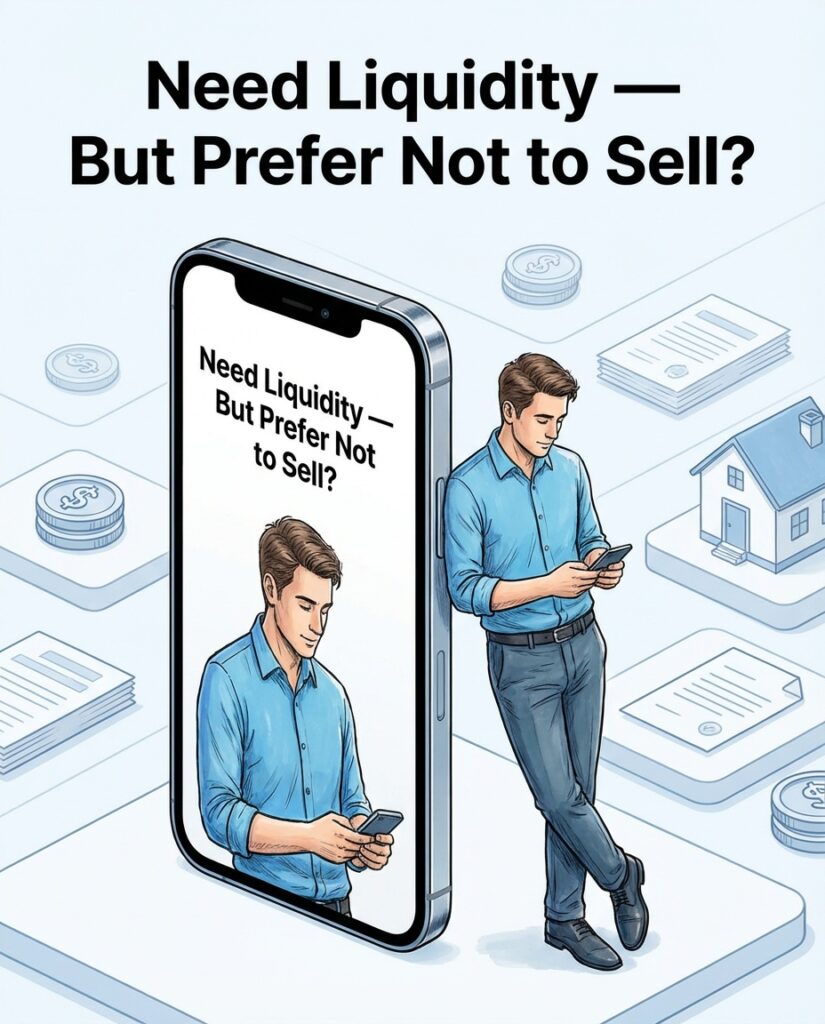

Unlock the future of lending with on-chain origination, transcending tokenized assets to prioritize real-time financial actions over traditional ownership.
The Rise of On-Chain Origination: Why the Future of Lending Isn’t Just Tokenized Assets
Remember the last time you applied for a major loan? The mountain of paperwork, the weeks of waiting, the feeling that your financial life was being judged by a mysterious process behind a closed door. In a world where you can track a package in real-time, the lending industry often feels stuck in the past.
A new approach using blockchain technology is starting to change this. It promises to make getting a loan as transparent and automated as a simple online purchase. By recording every step on a secure, shared digital ledger that everyone can see, this system cuts out the guesswork and delay that have defined lending for decades.
The first, most obvious use for this is tying loans to digital versions of physical assets, like a house or a car. This is called on-chain lending, and it’s a huge step forward. But it still centers on a traditional idea: your ability to borrow is based on what you own.
The real revolution, and the true future of credit, goes one step further. Instead of just looking at your property, what if lenders could see a verifiable, live history of your financial activity—your income, your spending, your payment history? This fundamental shift from lending against what you own to lending against what you do is poised to redefine financial access for millions.
What Does ‘On-Chain’ Mean? Think of a Global, Un-Erasable Notebook
The foundation of this new lending world is the concept of “on-chain,” which means an event or agreement is recorded on a blockchain—a shared, permanent digital ledger. Think of it like a global public notebook that anyone can view but no one can erase or alter. Once a page is written, it’s there forever for all to see.
Your current bank account works the opposite way. Its records are “off-chain,” stored on a private, company-owned server. Only you and the bank can see the full details, and you have to trust that the bank is keeping accurate track of everything. The information is siloed, hidden from the outside world.
This transparency is the key. When a loan agreement is placed on-chain, it isn’t just a private deal anymore. It becomes a verifiable fact on a public network. This creates trust not through a single institution, but through shared, undeniable proof. It’s a foundational shift from trusting a company to trusting a system, opening the door for entirely new ways to manage money.
Step 1: Using Your House’s ‘Digital Deed’ as Collateral
The first and most obvious way this new on-chain world improves lending is by changing how we handle collateral. This is done through a process called tokenization, which sounds complex but is surprisingly simple. Think of it as creating a secure, digital certificate of ownership for a real-world item. It’s like having the deed to your house, but instead of a piece of paper in a safe, it’s a unique digital token on the blockchain that proves you are the owner.
Using this “digital deed,” the loan process becomes dramatically faster. Rather than mailing documents and waiting for county clerks, you can instantly pledge this digital token as collateral online. The entire agreement can be locked into a smart contract—a sort of digital vending machine that holds the token securely and operates based on pre-agreed rules without needing a human banker to oversee it. The result is a loan that is faster, cheaper, and more transparent for everyone involved.
This is certainly an improvement, but if you look closely, you’ll spot the catch. This entire system still relies on you owning a valuable physical asset in the first place, whether it’s real estate, a car, or a piece of fine art. It makes life easier for people who already have wealth, but it doesn’t do much for the small business owner or freelancer who lacks major assets to pledge as collateral.
While digitizing ownership is a powerful step forward, it isn’t the true revolution. It’s simply a better, faster version of the system we already have. The real breakthrough comes from a much more profound shift in thinking: moving the focus from what you own to what you do.
The Real Breakthrough: Why Your Financial Actions Matter More Than Your Assets
This is the core idea behind on-chain origination. Instead of looking at a static asset like a house, lenders can now look at your dynamic financial activity as it happens on the blockchain. Imagine every paycheck you receive, every bill you pay on time, and every sale from your online store being recorded in a secure, verifiable, and real-time financial story. This isn’t a stale credit report from three months ago; it’s a live financial resume that proves your reliability.
This new approach creates a more intelligent and fair way to measure creditworthiness. Instead of relying on a single, often mysterious credit score, lenders can assess your ability to repay a loan based on your actual, proven cash flow. This is a move from asset-based credit to activity-based credit. For the first time, your consistent financial behavior can be just as valuable as owning a physical asset.
Suddenly, the door to borrowing opens for millions who were previously shut out. It’s no longer about having collateral sitting in a bank vault, but about demonstrating your economic pulse through your daily activities. This unlocks opportunities for freelancers, small business owners, and creators around the globe. But how would this actually work for someone without a traditional 9-to-5 job?
How a Freelancer Can Instantly Get a Business Loan—No Bank Required
Let’s meet Maria, a freelance graphic designer. Her business is thriving, with regular payments from clients, but her income fluctuates. When she approaches a bank for a loan to buy a new, powerful computer, she’s seen as a risk. The bank’s rigid system, designed for traditional 9-to-5 salaries, can’t properly evaluate her financial health, and her application is denied.
Frustrated, Maria turns to a new kind of system. For the past year, she has used a service that records her client payments on the blockchain. This creates a secure, verifiable financial resume. It’s not about cryptocurrency; it’s about bringing her real-world cash flow into a transparent digital format. Every invoice paid by a client becomes another entry proving her business is consistent and reliable.
Now, needing that loan, Maria connects her digital wallet to a global on-chain lending platform. The platform’s automated system doesn’t ask for a salary slip or a credit score. Instead, it instantly analyzes her on-chain history—the frequency of her payments, the reputation of her clients, and her steady cash flow over the last 12 months. It sees a healthy business, not a risky freelancer.
Based on the strength of her financial activity, the system approves her loan in minutes, sending the funds directly to her. Maria didn’t have to pledge any collateral or wait weeks for an underwriter’s judgment. She simply proved her creditworthiness through her actions. This instant approval isn’t magic; it’s powered by a revolutionary piece of code that acts like a digital vending machine for loans.
The ‘Digital Vending Machine’ That Powers Automated Loans
That “digital vending machine” we mentioned has a name: a smart contract. Think of it less like complex code and more like a set of unbreakable digital promises. Before a loan is issued, the borrower and lender agree on the rules. Such as the loan amount, the interest rate, and what constitutes proof of creditworthiness. These rules are then programmed directly into the smart contract. It’s like a digital agreement that automatically executes itself.
Once activated, the smart contract acts as an impartial and automated referee. In Maria’s case, it held the lender’s funds securely and was programmed with one core instruction: “If this borrower’s financial history shows at least X income over Y months, release the funds.” When the system confirmed her on-chain data met those exact conditions, the contract did its job instantly, without needing a person to review a file or click a button.
This automated execution is the engine behind on-chain lending’s efficiency. We must replace the manual work of loan officers, underwriters, and escrow agents. This must be done with a single, self-executing contract, the process becomes dramatically faster and cheaper. It cuts out the middlemen and their associated costs and delays.
This helps create a direct and transparent path from lender to borrower. This foundation of trustless automation paves the way for a lending system. This system is not only more efficient but also profoundly more accessible.
Faster, Fairer, For Everyone: 3 Huge Benefits of On-Chain Lending
So, what does this shift from manual paperwork to automated code actually mean for you? Or for that small business owner we talked about? The impact goes far beyond just convenience. It promises to rebuild the very foundation of lending to be faster, more logical, and open to everyone. It creates three game-changing benefits.
- Radical Speed: Loan approvals can happen in minutes, not the weeks or months typical of traditional banks. When the “vending machine” can instantly verify all the necessary information, there’s no waiting for someone to review your file.
- Unbiased Logic: A smart contract follows its programmed rules perfectly. It can’t be influenced by the conscious or unconscious biases that might affect a human loan officer. This ensures the decision is based purely on data.
- Global Access: Since the system operates on a global network, a lender in Tokyo can fund a freelance designer in Toronto as easily as if they were next door, opening up capital to anyone with an internet connection.
Together, these advantages create a powerful cycle. By removing human bias and geographic barriers, the system unlocks opportunities for millions of people previously invisible to the banking world. It judges you on the verifiable truth of your financial activity, not just a static, often incomplete, credit score.
Of course, building this more inclusive financial future isn’t as simple as flipping a switch. Creating a system that is both transparent and private, while also navigating global regulations, presents its own set of significant hurdles.
What Are the Hurdles? Privacy, Rules, and Proving You’re You
While a public ledger offers incredible transparency, it also raises a critical question: How can you prove your financial history without broadcasting every transaction to the world? It’s a major hurdle, as no one wants their entire financial life to be an open book. This privacy paradox is one of the biggest challenges for developers to solve.
Beyond privacy, there’s the reality of regulation. Lending is a tightly controlled industry for good reason, designed to protect both borrowers and lenders. Figuring out how this new, borderless technology fits within existing national laws is a complex puzzle that lawyers and innovators are working on right now.
Perhaps the biggest piece of the puzzle, however, is proving you are who you say you are. To prevent fraud, the system needs a reliable way to link your digital activity to a unique, real-world person. This is where a powerful new concept called decentralized identity comes in.
Think of it as a digital passport that you control completely. You can use it to prove you’re over 21 without revealing your birthday, or verify your income level without showing its exact source. Developing this kind of decentralized identity for credit scoring is the key. It solves the trust problem, allowing the future of credit to finally shift its focus.
From ‘What You Own’ to ‘What You Do’: Building a Fairer Financial Future
The world of lending, once defined by slow decisions and mountains of paperwork, no longer has to feel like a mystery. This moves the conversation beyond buzzwords to the fundamental shift happening. The true promise of blockchain technology isn’t just about creating a digital title for a physical asset, but about building a financial reputation from scratch, based entirely on verifiable actions.
Your first step in applying this knowledge is simple. The next time you hear about a new blockchain project, ask yourself: Is this just a faster way of doing an old thing, or is it creating a new way to establish trust? Answering that question will allow you to confidently separate fleeting hype from genuine innovation in the future of credit.
This powerful shift from what you own to what you do is the engine behind a more equitable financial system. On-chain origination promises more than just speed; it offers a transparent path to financial inclusion, giving millions of people the chance to prove their creditworthiness. You now understand not just a new technology, but the blueprint for a fairer financial world.