
Last updated: April 23, 2026 · Reviewed by Jordan M. Reyes for 2026 rates and protocol terms.
As of January 2026, the Decentralized Finance (DeFi) sector has reached a market valuation of approximately $238.54 billion, according to industry reports from Mordor Intelligence. Lending and borrowing protocols remain the cornerstone of this ecosystem, accounting for roughly 27% of the total DeFi market share.
The 2026 landscape is characterized by a definitive move away from monolithic liquidity pools toward modular architectures and isolated risk models. This structural shift aims to mitigate the systemic contagion risks observed in previous market cycles.
1. Aave: Transition to the “Hub-and-Spoke” Model (v4)

Aave remains the dominant liquidity provider with over $4.5 billion in TVL on its core markets. Following the closure of a four-year SEC investigation in August 2025, Aave Labs accelerated the rollout of Aave v4.
Technical Architecture: v4 utilizes a Hub-and-Spoke design. A central “Liquidity Hub” manages accounting and cross-chain logic, while specialized “Spokes” act as execution layers for different asset classes (e.g., RWAs, stablecoins, or institutional vaults).
Risk Pricing: Unlike previous versions, v4 introduces a three-tier Risk Premium system that dynamically adjusts borrowing costs based on the specific quality of the collateral provided, rather than a flat rate across the pool.
Reference: KuCoin News / Aave Governance Forum (December 2025).
2. Morpho Blue: Permissionless Isolated Lending
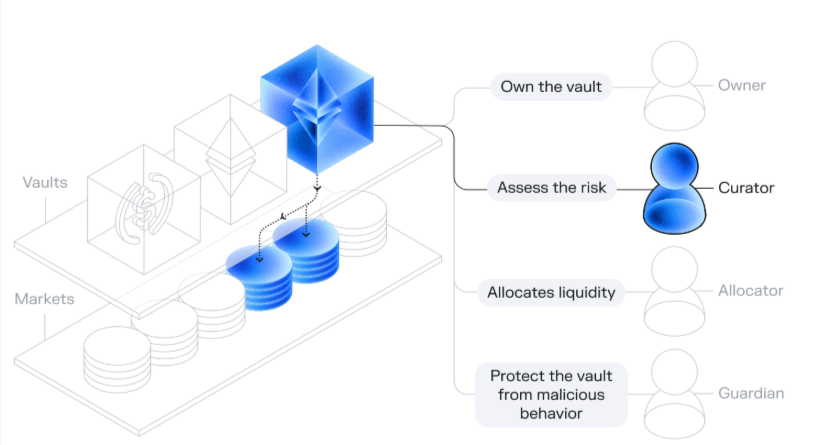
Morpho has emerged as a primary competitor to traditional pools by providing a base layer for permissionless lending.
Core Mechanism: Morpho Blue facilitates markets containing exactly two assets (one collateral, one loan). This isolation ensures that a failure in a small-cap token does not affect the liquidity of blue-chip assets like BTC or ETH.
Oracle Agnosticism: The protocol allows market creators to select any price oracle, providing flexibility for diverse asset types, including tokenized real-world assets (RWAs).
Governance Minimalism: Morpho Blue is designed as an immutable primitive, meaning its core parameters cannot be altered by centralized governance, enhancing its status as a “trustless” protocol.
3. Kamino Finance: Solana’s Capital Efficiency Leader

Kamino Finance has solidified its position as the premier money market on Solana, reaching $2.8 billion in TVL in late 2025.
The V2 Upgrade: Kamino’s Market Layer allows for permissionless market creation, while its Vault Layer uses automated algorithms to allocate liquidity across the highest-yielding, safest pools.
Institutional Integration: In early 2026, Kamino began piloting Fixed-Rate Loans in partnership with FalconX, catering to institutional requirements for predictable yield and liability management.
Risk Mitigation: The protocol utilizes Chainlink low-latency oracles and has maintained a record of zero bad debt through the volatility of 2025.
Reference: RockawayX Insights / CoinMarketCap Institutional Reports (January 2026).
4. Sky (formerly MakerDAO) & Spark Protocol

Following the “Endgame” initiative, the Sky ecosystem has restructured its lending operations through SparkLend.
Stablecoin-Centric Lending: Users interact primarily with USDS (the upgraded version of DAI). SparkLend allows users to mint USDS directly against collateral, removing the need for a liquidity “lender” and reducing the interest rate spread.
Market Position: As of early 2026, Sky holds approximately $4.9 billion in TVL, making it the largest CDP (Collateralized Debt Position) protocol in existence.
Reference: Koinly DeFi Performance Report (January 2026).
5. JustLend: Global USDT Liquidity Rail

JustLend remains a Top 5 protocol due to its near-total dominance on the Tron network, which serves as a vital rail for global USDT movement.
Transactional Utility: With a TVL of $3.7 billion, JustLend is less focused on complex DeFi primitives and more on high-volume, low-fee stablecoin lending for retail users, particularly in the Asia-Pacific region.
Mechanism: It uses a traditional pool-based model optimized for the high-throughput, low-latency environment of the Tron blockchain.
Reference: Mordor Intelligence Geography Analysis (2026).
2026 Protocol Comparison Table
| Metric | Aave v4 | Morpho Blue | Kamino Finance |
| Primary Chain | Multi-Chain (L2 Focused) | Ethereum / Base | Solana |
| Risk Structure | Unified Liquidity Hub | Fully Isolated Markets | Market & Vault Layers |
| Primary Collateral | Bluechips & GHO | Permissionless / Any | SOL LSTs & Stablecoins |
| Best For | Institutional Stability | Technical Efficiency | High-Velocity Yield |
References
- Mordor Intelligence (January 2026): Decentralized Finance (DeFi) Market Size & Share Analysis – 2025-2031.
- Koinly (January 2026): 10 Biggest and Best DeFi Crypto Projects 2026.
- Chaos Labs (September 2025): Aave v4: A Design Framework for Pooled and Isolated Bluechip Collateral Markets.
- KuCoin (December 2025): Aave Reveals 2026 Roadmap Following SEC Investigation Closure.
- RockawayX (January 2026): Kamino ($KMNO) — Analysis of Solana’s Leading Money Market.
Frequently Asked Questions
What are the biggest DeFi lending protocols in 2026?
By total value locked, the top five are Aave, Compound, MakerDAO/Spark, Morpho, and Venus on BNB Chain. Aave leads with the broadest asset list and multiple chains, while Morpho has gained share through optimized lending markets.
How does Aave work?
Aave is a permissionless money market where users supply assets to earn yield and borrowers post collateral to take loans. Interest rates adjust algorithmically based on utilization. Aave V3 adds isolation mode, efficiency mode, and cross-chain portals.
Is Compound still relevant in 2026?
Compound pioneered DeFi lending and remains a trusted protocol, though its market share has slipped behind Aave and Morpho. Compound V3 simplified the design to a single-borrow-asset model, which reduces risk but limits composability.
What makes Morpho different?
Morpho is a lending layer that sits on top of protocols like Aave and Compound, matching lenders and borrowers peer-to-peer when possible to deliver better rates for both sides. When no match exists, users fall back to the underlying pool.
Are DeFi lending protocols insured?
Protocols themselves are not insured by default, but users can buy cover from Nexus Mutual or InsurAce against smart contract failure. Some CeFi-adjacent platforms like Aave Arc offer institutional tiers with added safeguards.